6/26 Richer than ever / more entrepreneurship / € for democracy
Hello! You are reading Das Neue Geben with currently 6,787 others. 📖 This edition from Monday, June 22, 2026, has 1,662 words · Reading time ~8 minutes
Dear readers,
today I am celebrating a milestone birthday. And this time, I feel the contrast between the number and my attitude to life particularly clearly: I am just getting started, wanting to ride a wave that I first have to blow up myself.
But I think that's just what entrepreneurship feels like. And right now, I'm learning more about it than ever before. Because: There is someone new in my life. For several months, I have been shaped by deep conversations with other founders of the Entrepreneurs’ Organisation.
These and many other conversations inspire this newsletter on the difference between entrepreneurship and wealth defense. I get passionate about this in the essay and recently in the Handelsblatt. And so that it doesn't just remain an appeal, today I am sharing a lot of concrete details on mobilizing the next generation of givers and using wealth for democracy. I look forward to your feedback!
Warmly,
Felix
PS: At the German Startup Award, your votes were enough for second place behind a great winner, thank you very much! The bcause team is all the more delighted about the award as Berlin's most transformative social enterprise. 🎉
✍️ ESSAY: Wealth and Entrepreneurship
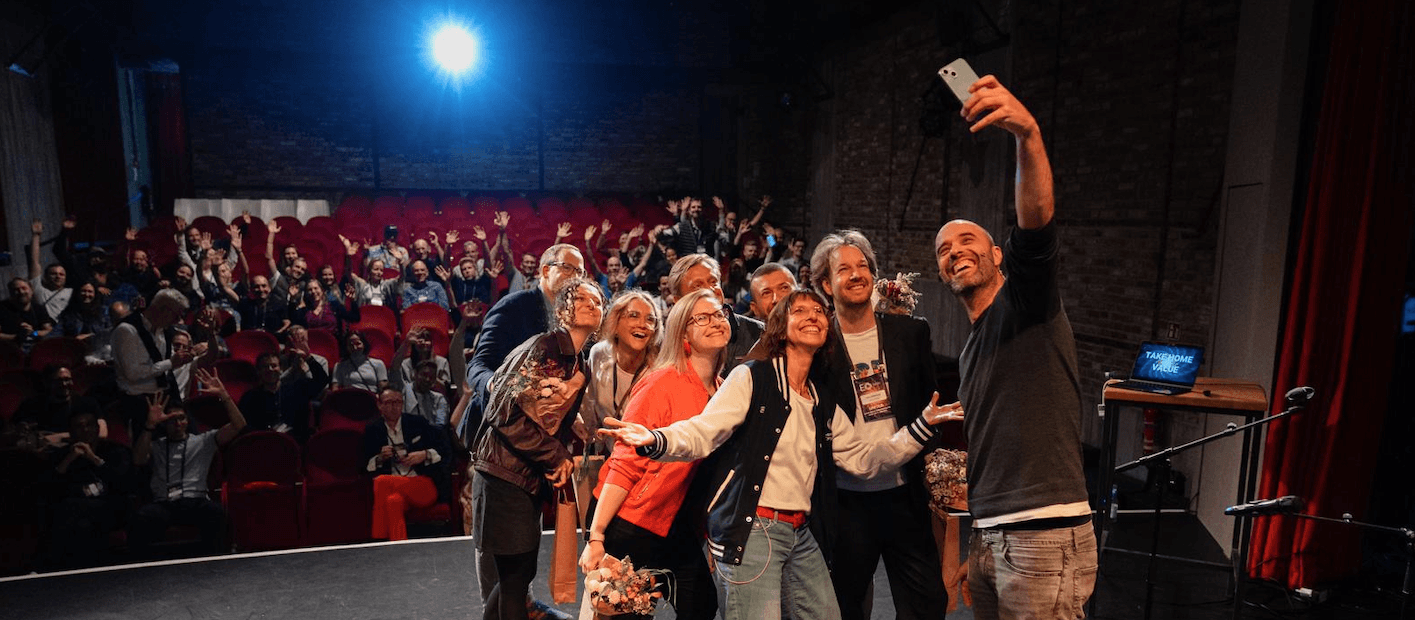
Photo: Among entrepreneurs at the Entrepreneurs’ Organisation
Anyone who, like me, talks about wealth in our society is quickly put into one of two boxes: either for or against. And since my last essay (on giving, which received a lot of resonance at the German Foundation Day), figures have been published that virtually force a positioning.
According to the World Wealth Report, the number of millionaires in Germany has risen by eleven percent, and their wealth by 12.7 percent. Significantly more than the global average. Meanwhile, our economy is stagnating, and real wages are at 2019 levels. UBS counts the largest wealth transfer wave ever measured for 2025. And ten days ago, Elon Musk became the first trillionaire in history.
One has to be outraged. Right? At least 81 percent of Germans do, compared to 61 percent worldwide (Edelman Trust Barometer). Unfortunately, I find boxes to be extremely boring places; I prefer to sit between two stools. And I claim that behind the numbers lie two completely different realities of wealth, which we often lump together: wealth and entrepreneurship. (And a spoiler for my Handelsblatt column on Friday about Elon Musk: I believe there are many reasons for criticism, but his twelve zeros after the one are rather at the end of the list.)
Entrepreneurship puts something at risk for a future that does not yet exist. That is rarely glamorous. More often, it is a step away from security. Recently, at the Entrepreneurs’ Organisation, I spoke very personally about the moments when I decided against the well-known names, against the comfortable "business as usual" in jobs that no longer convinced me. Most recently, in the leadership of the Association of German Foundations.
Wealth is rarely created in the process. The large fortunes in Germany come from inheritances, mostly over generations already. And they are invested by professionals who do everything they can to ensure that the future remains just like the present.
In the public debate, wealth and entrepreneurship often blur into a single enemy image. And that is why pure defense can hide behind the prestige of risk-taking. Research separates the two more sharply: inequality in total wealth is only weakly linked to the state of democracy, but politically connected wealth harms democracy (Fagerstrom 2023). Wealth, that is, which buys access, influence, and protection. Which entrenches itself behind a lobby. And builds firewalls because the fires of the present are getting closer and closer (Handelsblatt 19.6.2026).
Wealth does not need entrepreneurship. A lot of money grows much more safely diversified in anonymous financial markets than with individual ventures. But that is a fateful pact. Goethe wrote a line for this in Faust that has never been more important than today: 'What you have inherited from your fathers, acquire it in order to possess it.' Responsibility means emancipating oneself from the templates of the past and finding answers to today's problems with money.
Because entrepreneurship needs wealth. Because ideas need funding. Especially when they come from corners of society that do not have natural access to the networks where money is normally distributed. This is especially true for founders and organizations working on societal issues.
I believe we need a new lobby in the original sense of the word: a lobby in the political arena where we discuss how we can voluntarily put more wealth to work for the best ideas, instead of defending it from being seized by the state. I am currently planning an open process for this in September: a kind of Forum Neues Geben based on international models like the Generosity Commission (USA), with recommendations on how we can rethink the role of wealth in our democracy. As an opportunity for the growth of the most important ideas for our country.
Club Neues Geben
Effective giving is a complex and personal task. The Club Neues Geben offers guidance through networking. No expensive consulting. No fundraising.
“Play, fun AND chocolate, that really is impossible!” This old commercial for Kinder Surprise sometimes comes to mind when I describe how bcause pays interest on donation balances: with a 4% net target return, high security, liquidity, AND positive impact.
And because transparency is the foundation of trust, we are happy to explain this in our public webinar "Impact, return, tax-free: How we invest money at bcause" with our Head of Finance Marvin Wiek and Wiebke Merbeth from our investment advisory board. For everyone who wants to not only pass their money on, but make an impact on the way there. And for all organizations wondering what happens to pledged donations until they are called up.
The Club Neues Geben is for everyone who commits or wants to commit a five-figure sum financially per year. Feel free to write to katharina.bauch@bcause.com if you are interested or know someone who would benefit from our Masterclasses and personal Deep Dives.
A person who inspires me: The NextGen, the unknown being
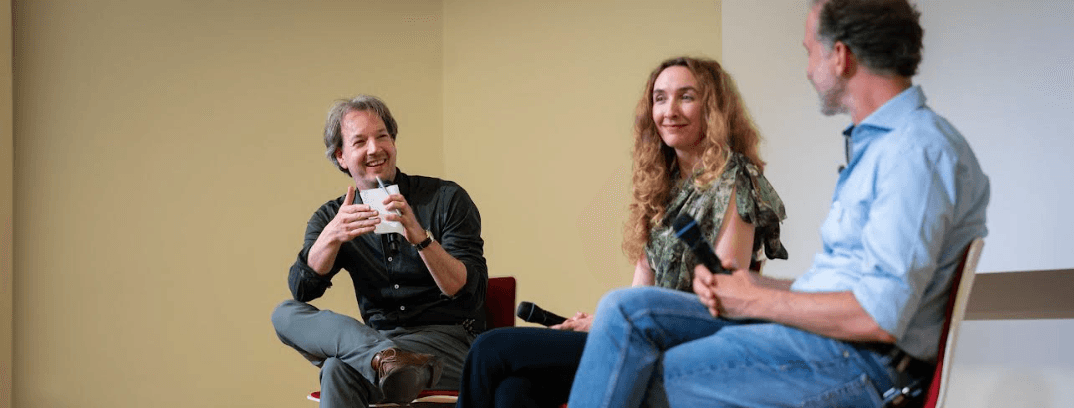
Photo: With Ruth von Heusinger and Kai Viehof on the final panel of DFK26
Who is NextGen, and if so, how many? In view of the funding crisis and decline in donations, their major gifts are a great hope for many organizations. In the packed closing panel of the German Fundraising Congress in Berlin on June 4, we shared five insights with Germany's leading fundraisers that surprised many:
Those who are rich on paper do not necessarily have liquid funds. Before giving comes the tedious process of unleashing wealth with (and sometimes against) family and service providers.
Givers need other givers. Peer networks are becoming the most important places for choosing organizations. This is usually beyond the direct reach of fundraisers.
NextGens often think of donations, impact investing, and their own entrepreneurship together. They approach organizations when they fit strategically. Then also with larger sums and on a long-term basis.
Even though visible giving is a major lever, NextGens also need the option of anonymity to protect themselves from requests and conflicts.
This is especially true because giving is becoming increasingly political. And because the wealthy people I speak to are very aware of the public climate they are moving in. And that philanthropy is always part of a tax and distribution debate.
bcause for Organizations
bcause enables non-profit organizations to collect donations digitally, manage them centrally, call them up flexibly – and earn interest until then.
This actually ought to be the "number that sticks in your mind," because it generated many questions at the Germany Fundraising Congress. Over 530,000 organizations can now be found on bcause. We have brought the recipient register onto the platform. This not only saves organizations another registration but also opens up completely new possibilities for fundraising and funding strategies. Just try it out: Find your own organization at https://cash.bcause.com/register and claim the profile with an authorized person - at no cost or obligation.
Or, for specific questions about using bcause, simply book an online appointment with my colleagues Nicole and Simone .
A number that sticks in your mind: 18%
This is how much wages in a certain industry have risen recently. No, not in the consultant and banker jobs that used to be the career goals of those who wanted to earn a lot of money. No, it is the care workers who are gaining ground fastest. This is not a political decision. It is scarcity. AI makes knowledge work infinitely more productive; a contract review takes minutes instead of days. But an hour of care remains an hour of care. A string quartet needs four musicians. No ChatGPT can change that.
What is scarce and irreplaceable becomes relatively more expensive. The market is thus currently upgrading care work, which forty years of care policy failed to push through. For giving, this means: anyone who gives money to nursing, education, or hospice work is not funding a recipient at the margin of value creation. They are investing in the part of the economy whose prices are systematically rising.
More on my prediction that working with people could be significantly better paid in the AI era → Handelsblatt from May 29.
An idea to think further: Donation funds for democracy
The Starke Demokratie Donation Fund, which we set up together with PHINEO, shows something simple and important: guidance helps, and the willingness to give is there. Just two weeks after the launch, over €330,000 in donations have been pledged. Anyone can join in.
And there are many other funds and donation campaigns currently emerging, including the German Democracy Fund, the digital foundations of Christian Vollmann and Luis Hanemann, up to the birthday campaign of Axum Berhe.
But this success raises a larger question: what role should private wealth play in and for our democracy? When private capital strengthens schools, media, civil society, social innovations, or democratic resilience, it is more than generosity. It touches on legitimacy, transparency, and the uncomfortable question of what only the state is actually allowed to do. We are planning a larger process on this very topic in September: a circle of wealthy people, academia, politics, and support organizations to discuss how private capital can be multiplied for the common good without replacing democratic responsibility. More on this in the next newsletter!
💡 MORE FROM FELIX
“The inheritance tax scandal around family foundations” on Reschke Fernsehen
My recent Handelsblatt columns “Why wealth inequality divides society” from June 19 and “No more crumbs? When the market does what morality demands” from May 29.
📅 Upcoming Appearances:
15.7. United Philanthropy Infrastructure Summit, Washington/DC
-SUMMER BREAK-
27.8. Berlin Chamber of Commerce “Financing in the social economy”
8.9. Forum Neues Geben, Berlin
10.9. The Frontier Dinner, Zurich
14.9. Augenhöhe-Forum, Osnabrück → The inspiring story of host Karsten Wulf from founder to impact investor here on Spotify
15.9. Brains on Silicon, Dresden
12.10. Annual Conference of the Federal Association for Sustainable Economy
🔍 Needs & Leads

Speaking of entrepreneurship: For us as a startup, there is one place where we have reinvented ourselves time and again over the last two years: I recommend Neupitz (picture) for workshops and retreats. The slogan “Work. Lake. Balance” says it all. 💻⛵️😎
bcause is looking for twice the support: A working student with strong communication skills and passion for our work with organizations. And a working student for the expansion of our international networks. If interested, email Sophie.Drewitz@bcause.com
Our loss, your gain: Paul Huizing was until recently bcause CMO and is now working as a fractional CMO for founders and teams who want to grow → LinkedIn
Nothing works without data: The social entrepreneurship association SEND is asking for participation in the German Social Entrepreneurship Monitor: https://dsem2026.send-ev.de/ Deadline: July 12, 2026
Recommended by me: Julia Singh creates team experiences with her Deep Talks format that strengthen trust and have a long-lasting effect. For purpose-driven teams of 8 or more people, in German or English.
Managing Director wanted: The AMES Foundation protects Africa's vulnerable habitats - and needs an Executive Director for the next growth phase.
Feel free to write to me with your needs and leads.
Felix Oldenburg is an initiator in the field of social entrepreneurship and foundations. 🔗 Order the book "Der gefesselte Wohlstand" here 🎧 Or as an audiobook while jogging, cooking, driving... 📱On Instagram and LinkedIn for daily thoughts and discussion starters.
Did you like this edition? 👉 Recommend Das Neue Geben further and help us grow to 10,000 readers. 📮 Feedback? Write to me at fo@bcause.com 🔔 Whitelist this email so no issue ends up in spam
Felix Oldenburg CEO bcause · Board Member gut.org · Author "Der gefesselte Wohlstand"
Newsletter
So much is written. About everything. Except about giving. Every day I meet people who want to and can give more. Ideas and organizations that make a difference.
In my newsletter, I talk about topics that otherwise remain unexplained: Why people give or don't, which paths and wrong turns they take, how the market of giving works - with surprising numbers, inspiring portraits, and provocative ideas.